Alamosa County Warrants
Warrant records in Alamosa County require contact with local agencies since no centralized online database exists for public searches. The Alamosa County Sheriff's Office handles warrant inquiries and maintains records of active warrants issued within the county. You can reach them by phone or visit in person at their office on State Road 150. The combined court also keeps warrant information for cases filed in their jurisdiction. Most warrant checks happen through direct contact with these offices rather than online searches. Population in Alamosa County is around 16,655 so the system is smaller and more personal than urban counties.
Alamosa County Sheriff's Office
The Alamosa County Sheriff operates from 4364 State Road 150 in Alamosa. Main phone line is 719-589-5807. The office handles patrol duties, detention services, and warrant processing. When you call, ask for the warrants division or records department. They can tell you if an active warrant exists for a specific person. Be ready to provide full name and date of birth. The Sheriff's staff may not discuss warrant details over the phone with the subject of the warrant. That's a common policy to prevent people from evading arrest.
If you think you might have a warrant, calling through an attorney is often smarter. The lawyer can verify warrant status without triggering an arrest. Walking into the Sheriff's Office in person when you have an active warrant means you'll likely be taken into custody right away. Some people prefer to turn themselves in voluntarily with an attorney present. That can show good faith to the court and might help with bond. The detention facility can process surrenders but expect to go through full booking and wait to see a judge.
Alamosa County Combined Court
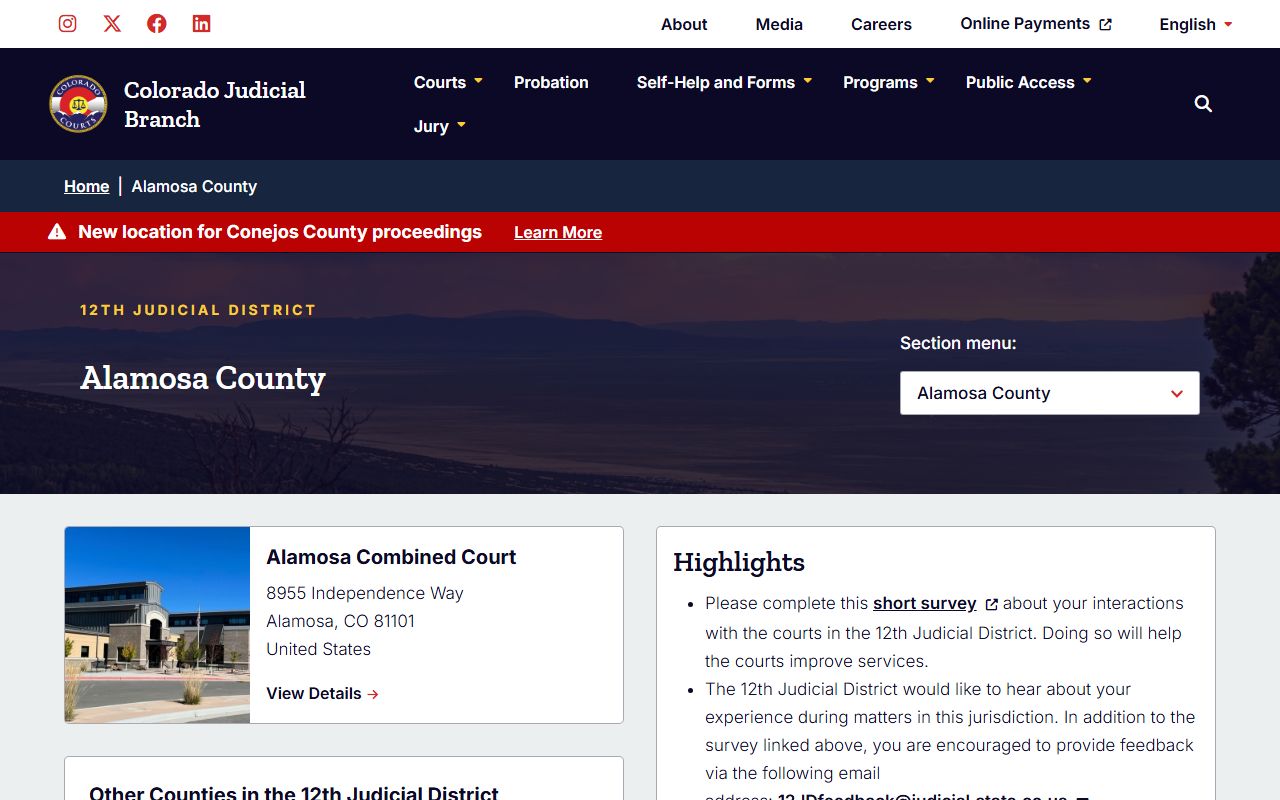
The Alamosa County Combined Court sits at 702 4th Street in Alamosa. Phone number is 719-589-4991. This court handles both district and county court matters. District court covers felonies and major civil cases. County court deals with misdemeanors, traffic violations, and small claims under $25,000. Both levels can issue warrants. Bench warrants come from failure to appear at a scheduled hearing. Arrest warrants stem from probable cause that a crime was committed.
Court clerks can look up case information if you have a case number. They'll tell you if there's a warrant attached to a case. But they can't give legal advice about how to handle it. Calling the court works better than showing up if you're worried about being arrested. Ask whether there's a bond amount set. If so, you might be able to post bond without going to jail. An attorney can file motions to quash warrants or request personal recognizance bonds. These options depend on the severity of charges and your criminal history.
Types of Warrants Issued
Alamosa County issues several categories of warrants. Arrest warrants are signed by a judge after law enforcement presents probable cause. These authorize police to arrest someone suspected of a crime. Bench warrants result from court order violations like missing a court date or violating probation terms. Search warrants allow officers to search property for evidence. Those aren't public until after execution. Fugitive warrants involve people wanted from other jurisdictions. Each warrant type has different procedures for resolution and bond.
Failure to appear warrants are common in Alamosa County. Someone gets a summons for a traffic ticket or misdemeanor. They forget the court date or can't make it. The judge issues a warrant. A small fine becomes a bigger problem. License suspensions often follow. These warrants can usually be cleared by appearing in court and paying fines or setting up a payment plan. More serious warrants for violent crimes or felonies require different handling. Bond amounts are higher and release conditions stricter.
Warrant Search Methods
Since Alamosa County doesn't offer online warrant searches, you have limited options. Calling the Sheriff at 719-589-5807 is the most direct method. Ask to speak with someone in records or warrants. Provide the full name and date of birth of the person you're searching. The staff will check their system and tell you if anything comes up. This works for checking on yourself or someone else. For your own warrants, consider having an attorney make the call.
Another option is contacting the court at 719-589-4991. Court staff can check by name or case number. If you know there was a case filed, they can pull it up and see if a warrant was issued. They'll also tell you the bond amount and next court date if scheduled. Third-party background check services claim to search warrants but they're not always accurate or current. The most reliable information comes directly from local agencies. Never rely solely on a commercial database for something this important.
Legal Framework in Colorado
Colorado law governs how warrants work across all counties including Alamosa. CRS 16-3-303 covers search warrant requirements. Warrants must be based on affidavits sworn before a judge. The affidavit has to establish probable cause and describe what's being searched. CRS 16-3-305 says search warrants expire after 14 days if not executed. Arrest warrants and bench warrants don't expire. They stay active until recalled by the court or the person is arrested.
The Colorado Open Records Act makes warrant information generally public. Exceptions exist for sealed cases and ongoing investigations. Under CRS 16-2-110, failing to appear when summoned is unlawful. Judges can issue bench warrants for non-appearance. This statute gives courts the power to enforce attendance. Consequences include license suspension, bail revocation, and contempt charges. Dealing with warrants promptly avoids these extra penalties.
Resolving Warrants
If you have a warrant in Alamosa County, hire a lawyer if possible. They can negotiate with prosecutors and file motions to recall the warrant. Some warrants get recalled if you agree to appear voluntarily. Others require posting bond first. An attorney can often arrange for you to surrender at the courthouse instead of jail. This is called a walk-through. You appear before the judge, get a new court date, and leave without being detained. Not every case qualifies but it's worth asking about.
For minor warrants on traffic violations or small misdemeanors, you might handle it yourself. Call the court and ask what needs to happen. They might let you pay a fine and close the case. Or they'll set a new court date for you to appear. Bring the money you owe if that's an option. Some courts allow payment plans if you can't afford the full amount up front. The key is taking action before police pick you up on the warrant. Voluntary compliance looks better to judges.
Colorado Bureau of Investigation Resources
The Colorado Bureau of Investigation maintains state criminal history records but doesn't provide public warrant searches. You can get a background check on yourself through their website for $5. That shows arrests and convictions but not active warrants. CBI works with local agencies through the Colorado Integrated Criminal Justice Information System. This system shares data between courts, law enforcement, and corrections. It helps track warrants across jurisdictions. For public warrant searches, you still need to contact local agencies directly.
San Luis Valley Context
Alamosa County is in the San Luis Valley, a rural area of southern Colorado. The valley includes several small counties with similar warrant procedures. Most rely on phone or in-person contact rather than online databases. If someone lived in multiple valley counties, you'd need to check each one separately. The 12th Judicial District covers Alamosa, Conejos, Costilla, Mineral, Rio Grande, and Saguache counties. Cases can move between these counties under certain circumstances. A warrant from one might show up in another if the person has contacts there.
Population density in the San Luis Valley is low. Law enforcement resources are spread thin. That means warrants sometimes sit longer before anyone actively pursues them. But they don't go away. A routine traffic stop can turn into an arrest if you have a warrant. Out of state travel can trigger problems too. Other states can see Colorado warrants through national databases. You might get stopped at an airport or border crossing. Better to resolve it in Alamosa than deal with extradition from another state.
Related Resources and Contacts
Alamosa County Sheriff's Office is at 4364 State Road 150, Alamosa, CO 81101. Phone 719-589-5807. Alamosa County Combined Court is at 702 4th Street, Alamosa, CO 81101. Phone 719-589-4991. For legal help, contact the Colorado Bar Association lawyer referral service or Colorado Legal Services if you qualify for free assistance. The court has self-help resources for people without attorneys. Local bail bondsmen can post bond if you can't afford the full amount. They typically charge 10-15% of the bond as a non-refundable fee.
Don't wait on warrants. The longer they sit, the worse consequences get. You might face additional charges for evasion. Bond amounts can increase. The court loses patience. Resolving warrants quickly shows responsibility and often leads to better outcomes. Even if you can't afford a lawyer, call the court and ask what your options are. Many judges work with people who make genuine efforts to comply. Ignoring the problem guarantees the worst result.